Today
20
in History
26
January
February
March
April
May
June
July
August
September
October
November
December
01
Sun
02
Mon
03
Tue
04
Wed
05
Thu
06
Fri
07
Sat
08
Sun
09
Mon
10
Tue
11
Wed
12
Thu
13
Fri
14
Sat
15
Sun
16
Mon
17
Tue
18
Wed
19
Thu
20
Fri
21
Sat
22
Sun
23
Mon
24
Tue
25
Wed
26
Thu
27
Fri
28
Sat
...
02-16-1968
Tet Offensive results in many new refugees
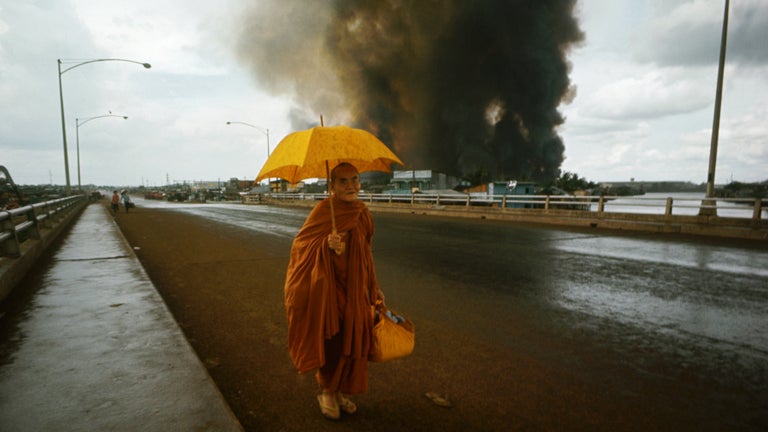
U.S. officials report that, in addition to the 800,000 people listed as refugees prior to January 30, the fighting during the Tet Offensive has created 350,000 new refugees.
The communist attack known as the Tet Offensive had begun at dawn on January 31, the first day of the Tet holiday truce. Viet Cong forces, supported by large numbers of North Vietnamese troops, launched the largest and best-coordinated offensive of the war, driving into the centers of South Vietnam’s seven largest cities and attacking 30 provincial capitals ranging from the Delta to the DMZ.
Among the cities taken during the first four days of the offensive were Hue, Dalat, Kontum, and Quang Tri; in the north, all five provincial capitals were overrun. At the same time, enemy forces shelled numerous Allied airfields and bases. In Saigon, a 19-man Viet Cong suicide squad seized the U.S. Embassy and held it for six hours until an assault force of U.S. paratroopers landed by helicopter on the building’s roof and routed them. Nearly 1,000 Viet Cong were believed to have infiltrated Saigon and it required a week of intense fighting by an estimated 11,000 U.S. and South Vietnamese troops to dislodge them. By February 10, the offensive was largely crushed, but with a cost of heavy casualties on both sides.
Militarily, Tet was decidedly an Allied victory, but psychologically and politically, it was a disaster. The offensive was a crushing military defeat for the Viet Cong and the North Vietnamese, but the size and scope of the communist attacks had caught the American and South Vietnamese allies completely by surprise. The early reporting of a smashing communist victory went largely uncorrected in the media and led to a psychological victory for the communists. The heavy U.S. and South Vietnamese casualties incurred during the offensive–and the disillusionment over the early, overly optimistic reports of progress in the war–accelerated the growing disenchantment with President Lyndon B. Johnson’s conduct of the war.
More news today
loading...