Today
20
in History
26
January
February
March
April
May
June
July
August
September
October
November
December
01
Fri
02
Sat
03
Sun
04
Mon
05
Tue
06
Wed
07
Thu
08
Fri
09
Sat
10
Sun
11
Mon
12
Tue
13
Wed
14
Thu
15
Fri
16
Sat
17
Sun
18
Mon
19
Tue
20
Wed
21
Thu
22
Fri
23
Sat
24
Sun
25
Mon
26
Tue
27
Wed
28
Thu
29
Fri
30
Sat
31
Sun
...
05-27-1940
British evacuation of Dunkirk turns savage as Germans commit atrocity
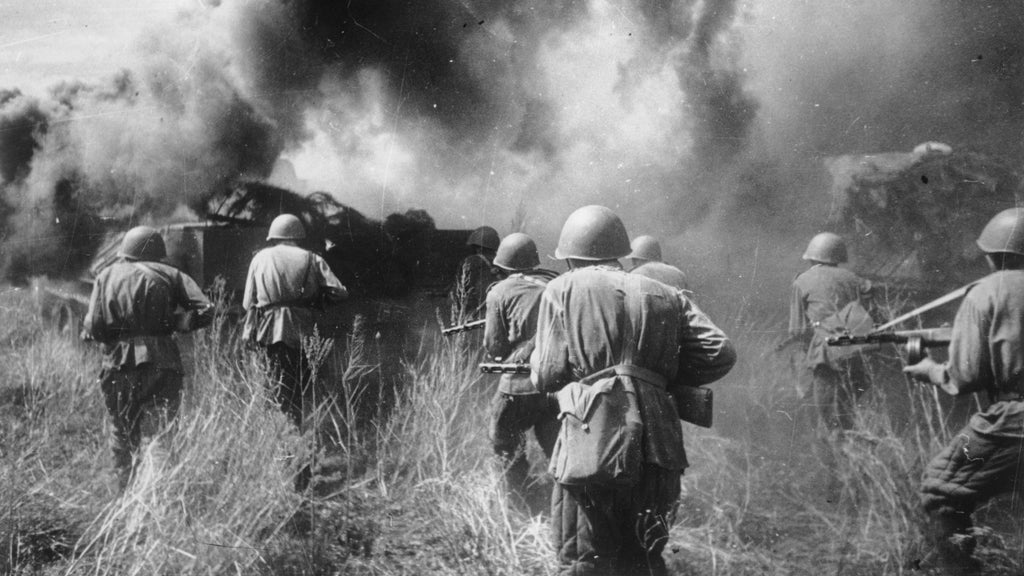
On May 27, 1940, units from Germany’s SS Death’s Head division battle British troops just 50 miles from the port at Dunkirk, in northern France, as Britain’s Expeditionary Force continues to fight to evacuate France.
After holding off an SS company until their ammo was spent, 99 Royal Norfolk Regiment soldiers retreated to a farmhouse in the village of Paradis, just 50 miles from the Dunkirk port. Ships waited there to carry home the British Expeditionary Force, which had been fighting alongside the French in its defensive war against the German invaders. Agreeing to surrender, the trapped regiment started to file out of the farmhouse, waving a white flag tied to a bayonet. They were met by German machine-gun fire.
They tried again and the British regiment was ordered by an English-speaking German officer to an open field where they were searched and divested of everything from gas masks to cigarettes. They were then marched into a pit where machine guns had been placed in fixed positions. The German order came: “Fire!” Those Brits who survived the machine-gun fire were either stabbed to death with bayonets or shot dead with pistols.
Of the 99 members of the regiment, only two survived, both privates: Albert Pooley and William O’Callaghan. They lay among the dead until dark, then, in the middle of a rainstorm, they crawled to a farmhouse, where their wounds were tended. With nowhere else to go, they surrendered again to the Germans, who made them POWs. Pooley’s leg was so badly wounded he was repatriated to England in April 1943 in exchange for some wounded German soldiers. Upon his return to Britain, his story was not believed. Only when O’Callaghan returned home and verified the story was a formal investigation made. Finally, after the war, a British military tribunal in Hamburg found the German officer who gave the “Fire” order, Captain Fritz Knochlein, guilty of a war crime. He was hanged.
More news today
loading...