Today
20
in History
26
January
February
March
April
May
June
July
August
September
October
November
December
01
Sat
02
Sun
03
Mon
04
Tue
05
Wed
06
Thu
07
Fri
08
Sat
09
Sun
10
Mon
11
Tue
12
Wed
13
Thu
14
Fri
15
Sat
16
Sun
17
Mon
18
Tue
19
Wed
20
Thu
21
Fri
22
Sat
23
Sun
24
Mon
25
Tue
26
Wed
27
Thu
28
Fri
29
Sat
30
Sun
31
Mon
...
08-11-1919
Weimar Constitution adopted in Germany
On August 11, 1919, Friedrich Ebert, a member of the Social Democratic Party and the provisional president of the German Reichstag (government), signs a new constitution, known as the Weimar Constitution, into law, officially creating the first parliamentary democracy in Germany.
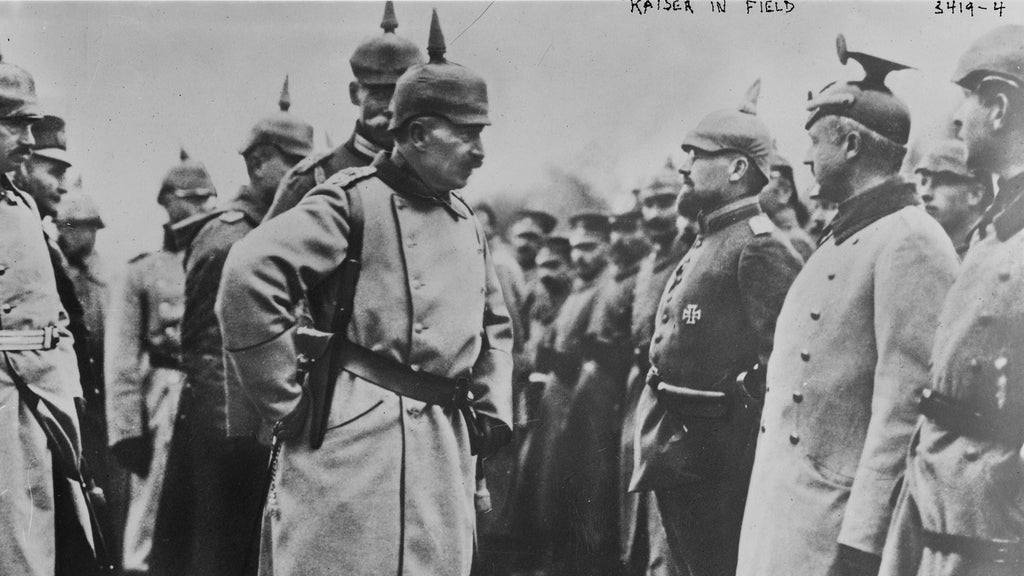
Even before Germany acknowledged its defeat at the hands of the Allied powers on the battlefields of the First World War, discontent and disorder ruled on the home front, as the exhausted and hunger-plagued German people expressed their frustration and anger with large-scale strikes among factory workers and mutinies within the armed forces. Beginning in 1916, Germany had basically been operating under a military dictatorship, the Supreme Army Command, led by Paul von Hindenburg and Erich Ludendorff. In late October 1918, however, with defeat looming on the horizon, Hindenburg pushed Kaiser Wilhelm II and the German government to form a civil government in order to negotiate an armistice with the Allies. The kaiser and Reichstag subsequently amended the latter organization’s constitution of 1871, effectively creating a parliamentary democracy in which the chancellor of Germany, Prince Max von Baden, was responsible not to Wilhelm but to the Reichstag.
This was not enough, however, to satisfy the far leftist forces within Germany, who capitalized on the chaos of the last days of a losing war effort to lead a general workers’ strike that November 7, and call for the establishment of a socialist republic along the lines of the Bolshevik government in Russia. Hoping to pacify the radical socialists, von Baden transferred his powers to Ebert, the leader of Germany’s Social Democratic Party (SPD), on November 9. Over the next six months, the Reichstag, led by the SPD, worked to write a new constitution that would solidify Germany’s status as a parliamentary democracy. Meanwhile, many within Germany blamed the government for what they saw as the humiliating terms imposed on the country by the victorious Allies in the Treaty of Versailles, particularly the treaty’s demands for German war reparations, justified by a clause that placed blame for the war squarely on the shoulders of Germany.
Under vicious attack from both the militarist right and the radical socialist left and identified by both sides with the shame of Versailles, the Weimar government and its constitution—signed into law on August 11, 1919—seemed to have a dim chance of survival. In this atmosphere of confrontation and frustration, exacerbated by poor economic conditions, right wing elements began to take an ever more pervasive hold over the Reichstag. This process, intensified by the worldwide depression that began in 1929, would culminate in the rise to power of Adolf Hitler, who exploited the weakness of the Weimar system to lay the foundations for himself and his National Socialist German Workers’ (or Nazi) Party to dissolve the parliamentary government and take absolute control over Germany.
More news today
loading...