Today
20
in History
26
January
February
March
April
May
June
July
August
September
October
November
December
01
Tue
02
Wed
03
Thu
04
Fri
05
Sat
06
Sun
07
Mon
08
Tue
09
Wed
10
Thu
11
Fri
12
Sat
13
Sun
14
Mon
15
Tue
16
Wed
17
Thu
18
Fri
19
Sat
20
Sun
21
Mon
22
Tue
23
Wed
24
Thu
25
Fri
26
Sat
27
Sun
28
Mon
29
Tue
30
Wed
...
09-10-1608
John Smith elected to lead Jamestown
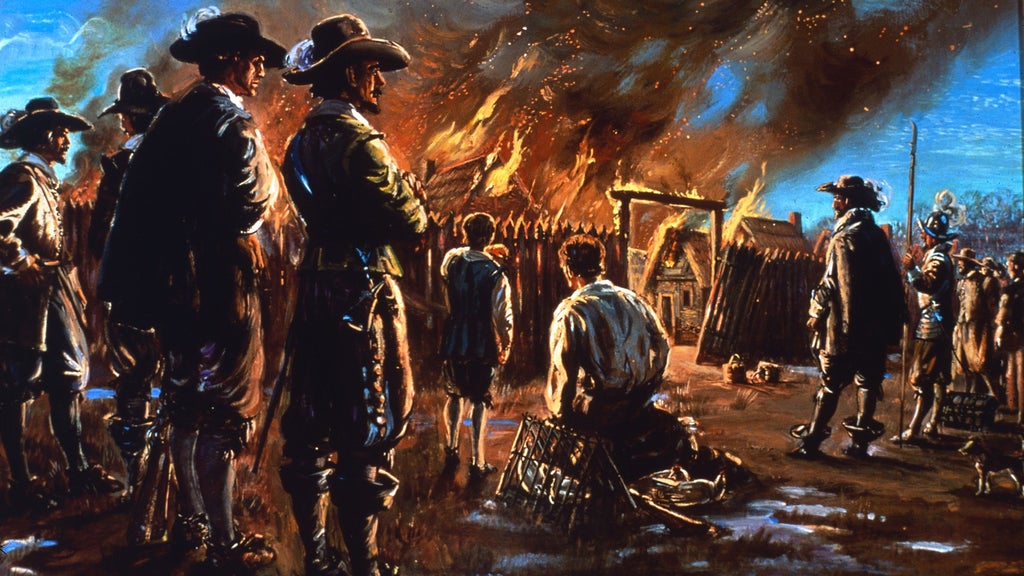
English adventurer John Smith is elected council president of Jamestown, Virginia—the first permanent English settlement in North America. Smith, a colorful figure, had won popularity in the colony because of his organizational abilities and effectiveness in dealing with local Native American groups.
In May 1607, about 100 English colonists settled along the James River in Virginia to found Jamestown. The settlers fared badly because of famine, disease, and Indian attacks, but were aided by the 27-year-old John Smith, who directed survival efforts and mapped the area.
While exploring the Chickahominy River in December 1607, Smith and two colonists were captured by Powhatan warriors. At the time, the Powhatan Indian confederacy consisted of around 30 Tidewater-area tribes led by Chief Wahunsonacock, known as Chief Powhatan to the English. Smith’s companions were killed, but he was spared and released (according to a 1624 account by Smith) because of the dramatic intercession of Pocahontas, Chief Powhatan’s 13-year-old daughter.
In 1608, Smith became president of the Jamestown colony, but the settlement continued to suffer. An accidental fire destroyed much of the town, and hunger, disease, and Indian attacks continued. During this time, Pocahontas often came to Jamestown as an emissary of her father, sometimes bearing gifts of food to help the hard-pressed settlers. She befriended the settlers and became acquainted with English ways. In 1609, Smith was injured from a fire in his gunpowder bag and was forced to return to England.
John Smith returned to the New World in 1614 to explore the New England coast, carefully mapping the coast from Penobscot Bay to Cape Cod. On another voyage of exploration, in 1615, Smith was captured by pirates but escaped after three months of captivity. He then returned to England, where he died in 1631.
More news today
loading...