Today
20
in History
26
January
February
March
April
May
June
July
August
September
October
November
December
01
Tue
02
Wed
03
Thu
04
Fri
05
Sat
06
Sun
07
Mon
08
Tue
09
Wed
10
Thu
11
Fri
12
Sat
13
Sun
14
Mon
15
Tue
16
Wed
17
Thu
18
Fri
19
Sat
20
Sun
21
Mon
22
Tue
23
Wed
24
Thu
25
Fri
26
Sat
27
Sun
28
Mon
29
Tue
30
Wed
...
09-18-1960
Fidel Castro arrives in New York
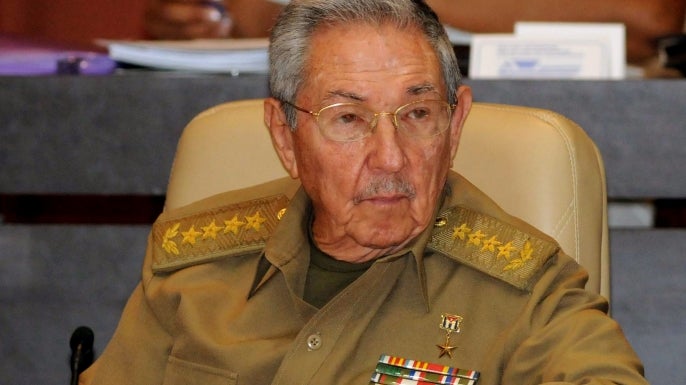
Fidel Castro arrives in New York City as the head of the Cuban delegation to the United Nations. Castro’s visit stirred indignation and admiration from various sectors of American society, and was climaxed by his speech to the United Nations on September 26.
By the time Castro arrived in New York City in September 1960, relations between the United States and Cuba were rapidly deteriorating. Since taking power in January 1959, Castro had infuriated the American government with his policies of nationalizing U.S. companies and investments in Cuba. Some American officials, such as Vice President Richard Nixon, believed that Castro was leaning perilously toward communism. (Castro did not publicly proclaim his adherence to communism until late-1961, when he declared that he was a “Marxist-Leninist”.) In March 1960, President Dwight D. Eisenhower ordered the CIA to begin training Cuban exiles to overthrow Castro’s regime. When the United States suspended the import of Cuban sugar in 1960, Castro’s government turned to the Soviet Union for economic assistance. The Russians were happy to oblige.
In September 1960, Castro led a delegation to New York City to address the United Nations General Assembly. He and his entourage caused an immediate sensation by deciding to stay at the Theresa Hotel in Harlem. While there, Castro met with a number of African American leaders, including Malcolm X from the Nation of Islam and the poet Langston Hughes. On September 26, Castro delivered a blistering attack on what he termed American “aggression” and “imperialism.” For over four hours, Castro lambasted U.S. policy toward Cuba and other nations in Latin America, Asia and Africa. The United States, he declared, had “decreed the destruction” of his revolutionary government.
Castro’s visit and lengthy public denunciation marked the final breaking point in relations between the U.S. and Cuba. In January 1961, the Eisenhower administration severed all diplomatic relations with Cuba. In April 1961, just a short time after taking office, President John F. Kennedy ordered the Bay of Pigs invasion, and the Cuban exile force, armed and trained by the CIA, landed in Cuba. The attack was a fiasco. Castro’s power in Cuba was solidified by his Bay of Pigs victory over the American “imperialists.” Castro remained the undisputed leader of the communist government in Cuba for over four decades; meanwhile, relations between the United States and Cuba remained strained. In late July 2006, an unwell Fidel Castro temporarily ceded power to his younger brother Raul. Fidel Castro officially stepped down in February 2008. In 2015, relations between the U.S. and Cuba were normalized, with the opening of embassies and diplomatic missions in both countries and the easing of travel restrictions. Castro died on November 25, 2016, at 90.
More news today
loading...