Today
20
in History
26
January
February
March
April
May
June
July
August
September
October
November
December
01
Tue
02
Wed
03
Thu
04
Fri
05
Sat
06
Sun
07
Mon
08
Tue
09
Wed
10
Thu
11
Fri
12
Sat
13
Sun
14
Mon
15
Tue
16
Wed
17
Thu
18
Fri
19
Sat
20
Sun
21
Mon
22
Tue
23
Wed
24
Thu
25
Fri
26
Sat
27
Sun
28
Mon
29
Tue
30
Wed
...
09-21-1904
The great Nez Perce leader Chief Joseph dies in Washington
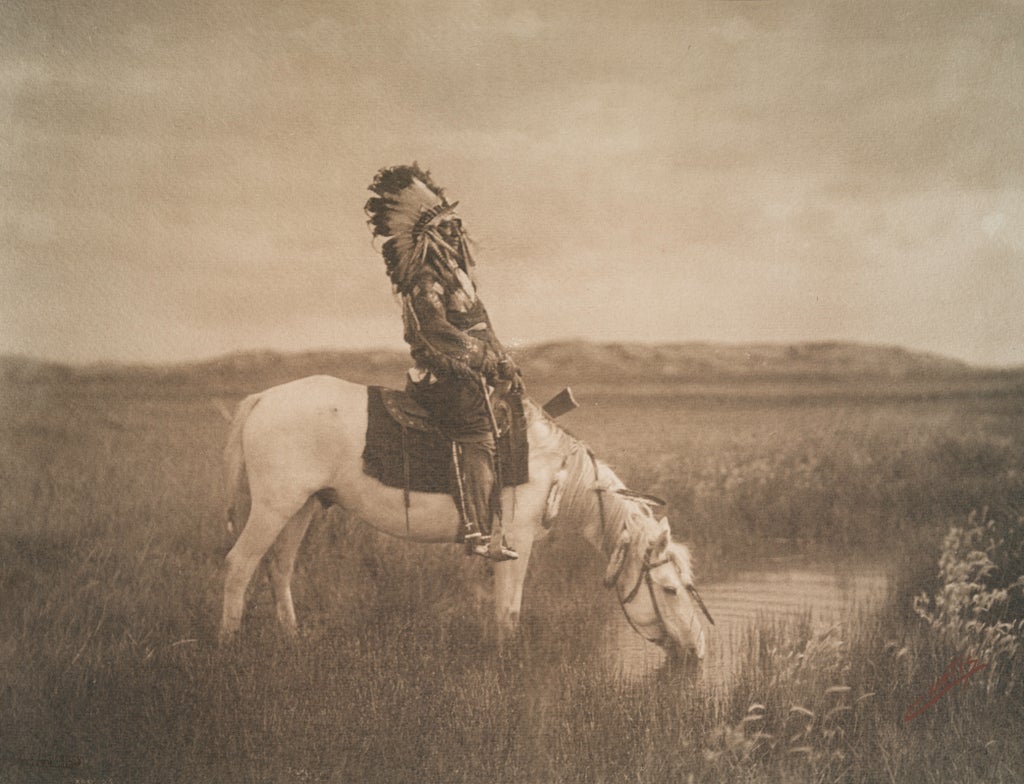
On September 21, 1904, the Nez Perce leader Chief Joseph dies on the Colville reservation in northern Washington at the age of 64. White settlers had described him as superhuman and a military genius. But in truth, the Nez Perce Chief Him-mah-too-yah-lat-kekt (“Thunder Rolling Down from the Mountains”) was more of a diplomat than a warrior.
Chief Joseph—as non-Natives knew him—had been elected chief of the Wallowa band of Nez Perce Indians when he was only 31. For six difficult years the young leader struggled peacefully against the whites who coveted the Wallowa’s fertile land in northeastern Oregon. In 1877, General Howard of the U.S. Army warned that if the Wallowa and other bands of the Nez Perce did not abandon their land and move to the Lapwai Reservation within 30 days, his troops would attack. While some of the other Nez Perce chiefs argued they should resist, Chief Joseph convinced them to comply with the order rather than face war, and he led his people on a perilous voyage across the flood-filled Snake and Salmon River canyons to a campsite near the Lapwai Reservation. But acting without Chief Joseph’s knowledge, a band of 20 young hotheaded braves decided to take revenge on some of the more offensive white occupiers in the region, sparking the Nez Perce War of 1877.
Chief Joseph was no warrior, and he opposed many of the subsequent actions of the Nez Perce war councils. Joseph’s younger brother, Olikut, was far more active in leading the Nez Perce into battle, and Olikut helped them successfully outsmart the U.S. Army on several occasions as the war ranged over more than 1,600 miles of Washington, Idaho, and Montana territory. Nonetheless, military leaders and American newspapers persisted in believing that since Chief Joseph was the most prominent Nez Perce spokesman and diplomat, he must also be their principal military leader.
By chance, Chief Joseph was the only major leader to survive the war, and it fell to him to surrender the surviving Nez Perce forces to Colonel Nelson A. Miles at the Bear Paw battlefield in northern Montana in October 1877. “From where the sun now stands,” he promised, “I will fight no more forever.” Chief Joseph lived out the rest of his life in peace, a popular romantic symbol of the noble “red men” who many Americans admired now that they no longer posed any real threat.
More news today
loading...