Today
20
in History
26
January
February
March
April
May
June
July
August
September
October
November
December
01
Thu
02
Fri
03
Sat
04
Sun
05
Mon
06
Tue
07
Wed
08
Thu
09
Fri
10
Sat
11
Sun
12
Mon
13
Tue
14
Wed
15
Thu
16
Fri
17
Sat
18
Sun
19
Mon
20
Tue
21
Wed
22
Thu
23
Fri
24
Sat
25
Sun
26
Mon
27
Tue
28
Wed
29
Thu
30
Fri
31
Sat
...
10-26-1775
King George III speaks to Parliament of American rebellion
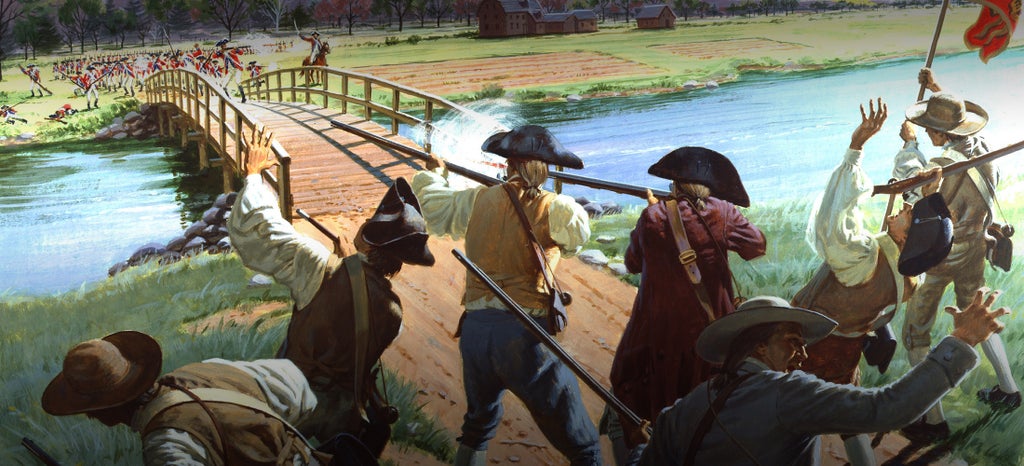
On October 26, 1775, King George III speaks before both houses of the British Parliament to discuss growing concern about the rebellion in America, which he viewed as a traitorous action against himself and Great Britain. He began his speech by reading a “Proclamation of Rebellion” and urged Parliament to move quickly to end the revolt and bring order to the colonies.
The king spoke of his belief that “many of these unhappy people may still retain their loyalty, and may be too wise not to see the fatal consequence of this usurpation, and wish to resist it, yet the torrent of violence has been strong enough to compel their acquiescence, till a sufficient force shall appear to support them.” With these words, the king gave Parliament his consent to dispatch troops to use against his own subjects, a notion that his colonists believed impossible.
Just as the Continental Congress expressed its desire to remain loyal to the British crown in the Olive Branch Petition, delivered to the monarch on September 1, so George III insisted he had “acted with the same temper; anxious to prevent, if it had been possible, the effusion of the blood of my subjects; and the calamities which are inseparable from a state of war; still hoping that my people in America would have discerned the traitorous views of their leaders, and have been convinced, that to be a subject of Great Britain, with all its consequences, is to be the freest member of any civil society in the known world.” King George went on to scoff at what he called the colonists’ “strongest protestations of loyalty to me,” believing them disingenuous, “whilst they were preparing for a general revolt.”
Unfortunately for George III, Thomas Paine’s anti-monarchical argument in the pamphlet, Common Sense, published in January 1776, proved persuasive to many American colonists. The two sides had reached a final political impasse and the bloody War for Independence soon followed.
More news today
loading...