Today
20
in History
26
January
February
March
April
May
June
July
August
September
October
November
December
01
Sun
02
Mon
03
Tue
04
Wed
05
Thu
06
Fri
07
Sat
08
Sun
09
Mon
10
Tue
11
Wed
12
Thu
13
Fri
14
Sat
15
Sun
16
Mon
17
Tue
18
Wed
19
Thu
20
Fri
21
Sat
22
Sun
23
Mon
24
Tue
25
Wed
26
Thu
27
Fri
28
Sat
29
Sun
30
Mon
...
11-02-1983
MLK federal holiday declared
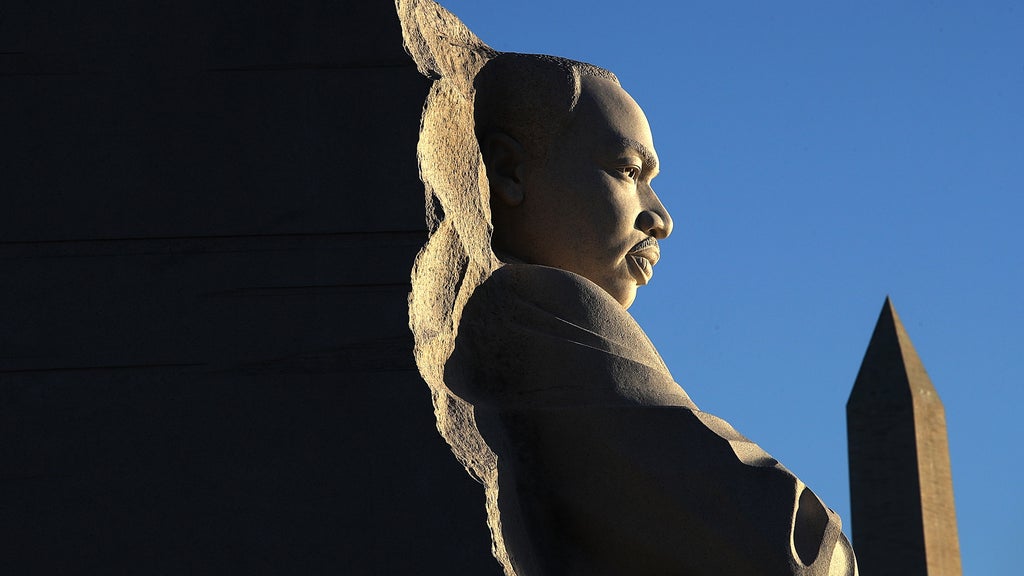
President Ronald Reagan signs a bill in the White House Rose Garden designating a federal holiday honoring Martin Luther King, Jr., to be observed on the third Monday of January.
Martin Luther King, Jr., was born in Atlanta in 1929, the son of a Baptist minister. He received a doctorate degree in theology and in 1955 organized the first major protest of the civil rights movement: the successful Montgomery Bus Boycott. Influenced by Mohandas Gandhi, he advocated nonviolent civil disobedience to racial segregation. The peaceful protests he led throughout the American South were often met with violence, but King and his followers persisted, and the movement gained momentum.
A powerful orator, he appealed to Christian and American ideals and won growing support from the federal government and Northern whites. In 1963, he led his massive March on Washington, in which he delivered his famous “I Have a Dream” address. In 1964, the civil rights movement achieved two of its greatest successes: the ratification of the 24th Amendment, which abolished the poll tax, and the Civil Rights Act of 1964, which prohibited racial discrimination in employment and education and outlawed racial segregation in public facilities. In October of that year, King was awarded the Nobel Peace Prize. He donated the prize money, valued at $54,600, to the civil rights movement.
In the late 1960s, King openly criticized U.S. involvement in Vietnam and turned his efforts to winning economic equality for poorer Americans. By that time, the civil rights movement had begun to fracture, with activists such as Stokely Carmichael rejecting King’s vision of nonviolent integration in favor of African American self-reliance and self-defense. In 1968, King intended to revive his movement through an interracial “Poor People’s March” on Washington, but on April 4 escaped white convict James Earl Ray assassinated him in Memphis, Tennessee.
More news today
loading...