Today
20
in History
26
January
February
March
April
May
June
July
August
September
October
November
December
01
Sun
02
Mon
03
Tue
04
Wed
05
Thu
06
Fri
07
Sat
08
Sun
09
Mon
10
Tue
11
Wed
12
Thu
13
Fri
14
Sat
15
Sun
16
Mon
17
Tue
18
Wed
19
Thu
20
Fri
21
Sat
22
Sun
23
Mon
24
Tue
25
Wed
26
Thu
27
Fri
28
Sat
29
Sun
30
Mon
...
11-26-1941
Japanese task force leaves for Pearl Harbor
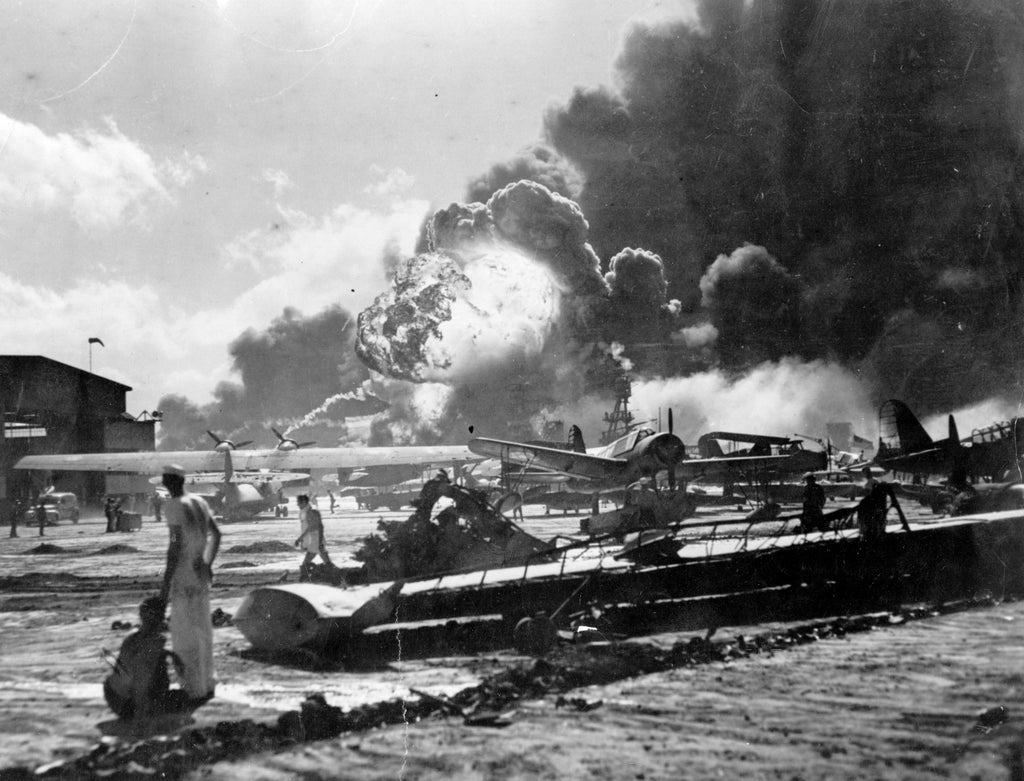
On November 26, 1941, Adm. Chuichi Nagumo leads the Japanese First Air Fleet, an aircraft carrier strike force, toward Pearl Harbor, with the understanding that should “negotiations with the United States reach a successful conclusion, the task force will immediately put about and return to the homeland.”
Negotiations had been ongoing for months. Japan wanted an end to U.S. economic sanctions. The Americans wanted Japan out of China and Southeast Asia-and to repudiate the Tripartite “Axis” Pact with Germany and Italy as conditions to be met before those sanctions could be lifted. Neither side was budging. President Roosevelt and Secretary of State Cordell Hull were anticipating a Japanese strike as retaliation—they just didn’t know where. The Philippines, Wake Island, Midway—all were possibilities. American intelligence reports had sighted the Japanese fleet movement out from Formosa (Taiwan), apparently headed for Indochina.
As a result of this “bad faith” action, President Roosevelt ordered that a conciliatory gesture of resuming monthly oil supplies for Japanese civilian needs canceled. Hull also rejected Tokyo’s “Plan B,” a temporary relaxation of the crisis, and of sanctions, but without any concessions on Japan’s part. Prime Minister Tojo considered this an ultimatum, and more or less gave up on diplomatic channels as the means of resolving the impasse.
Nagumo had no experience with naval aviation, having never commanded a fleet of aircraft carriers in his life. This role was a reward for a lifetime of faithful service. Nagumo, while a man of action, did not like taking unnecessary risks—which he considered an attack on the American naval base at Pearl Harbor to be. But Chief of Staff Rear Adm. Isoruku Yamamoto thought differently; while also opposing war with the United States, he believed the only hope for a Japanese victory was a swift surprise attack, via carrier warfare, against the U.S. fleet. And as far as the Roosevelt War Department was concerned, if war was inevitable, it desired “that Japan commit the first overt act.”
More news today
loading...